Check tool and account compatibility first, then configure access in official API Management. Never send credentials to a tutorial site or an unsolicited “setup agent.”
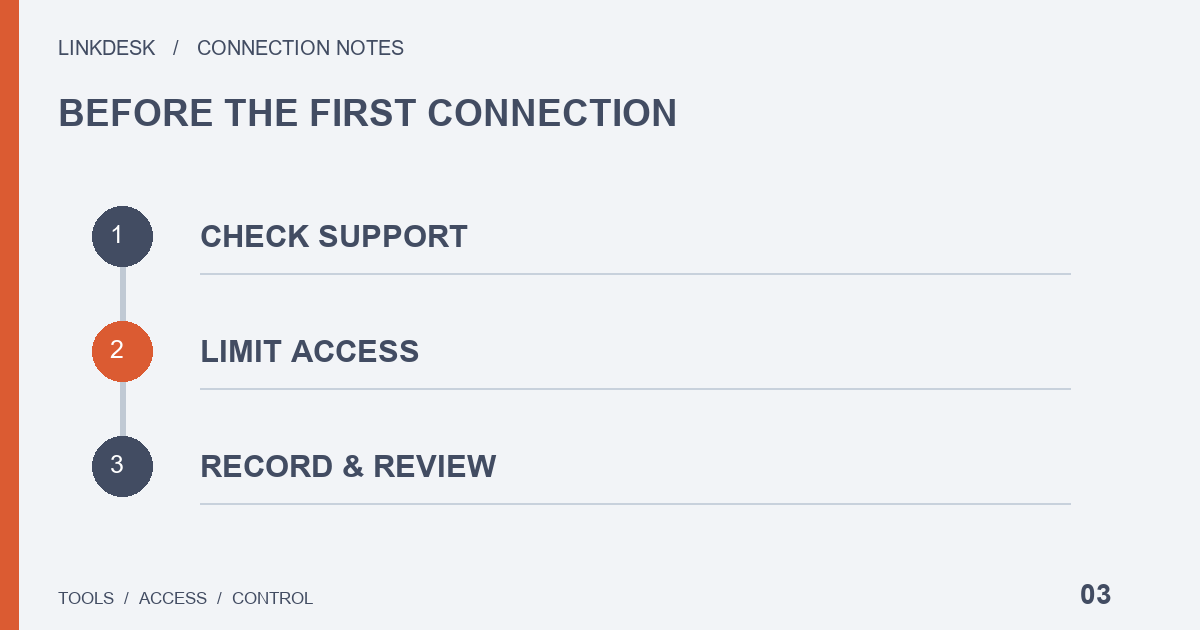
Verify what connects to what
Confirm the provider’s official website, supported Binance entity and whether you are using production or a test environment. Similar-looking domains, unofficial extensions and private-message links do not replace official instructions. Skip account authorization if public prices are all you need.
Check key type and required access
The official guide describes system-generated HMAC and self-generated Ed25519/RSA keys. A tool may not support all types. Changing key type does not guarantee compatibility. Start with the provider’s instructions, then review reading, trading and IP restrictions in official API Management.
Record settings, not secrets
A private maintenance list can hold the tool name, key label, creation date, purpose and review date. Do not paste a Secret, private key or fully signed request into a shared document. The checkers on this site do not need any of these credentials.
Check both setup and departure
Validate the lowest-risk expected function first, such as a read operation. Do not use a live trade you do not understand as a connection test. Review data retention and revocation. After leaving a tool, revoke its key on the platform and check pending tasks and account state. Removing the app does not revoke the key.
Define a result you can actually check
Replace “connect the account” with a narrow task: “show the last synchronized balances for the intended account area, without starting automated execution.” Include a stop condition. If the provider cannot explain permissions, supported accounts or a low-risk validation method, pause before creating credentials. A green status icon alone does not define success.
Ask how the tool distinguishes fresh information from cached or sample data. A number on the screen may be old. Keep recognizable interface labels alongside your own notes, especially when the documentation and your preferred reading language differ. Labels help identify the current setting without relying on its location in an old screenshot.
Check identity and compatibility before creating a key
“Supports Binance” still needs clarification about the service entity, account area, environment and connection method. Follow the provider’s official help route and record the relevant page. A search snippet or a copied screenshot can point you toward documentation but cannot replace current support requirements.
For an installed application, verify its distribution source. For a hosted service, identify the official login and connection path. A familiar logo does not establish origin. Language availability also does not prove that your actual residence, account entity and intended feature are supported. Resolve compatibility through formal documentation or official support rather than experimenting with credentials across unrelated options.
Create a connection card without credentials
Record the provider, documentation, account entity, environment, supported key type, chosen permissions, request location, revocation entry point and responsible person. Leave an unknown field explicitly unresolved. Completing a form with guesses makes it less useful.
Separate what the product supports from what you selected. A provider may support several environments while this connection uses only one. The card should help you navigate maintenance, not become a credential store. Do not include a Secret, private key, signed request or personal financial history. General questions about compatibility should not require support staff to access your account.
Prepare the credential entry step
Read the provider’s supported connection process before creating credentials. Different products can use different entry or authorization flows. Two input boxes do not establish that the tutorial you found applies. Check the requested fields and supported key type instead of guessing from their appearance.
Avoid exposing credentials through screen sharing, screenshots, chat drafts or diagnostic material. Before seeking help, inspect the address bar, notifications and surrounding panels as well as the obvious input field. If a secret has already reached an inappropriate place, deleting the message is not proof that every copy disappeared. Follow the platform’s process to revoke affected access and configure legitimate connections correctly.
Make each configuration change explainable
Keep your chosen use beside the official management interface. Every enabled capability should have a corresponding feature. Every network restriction should come from an identified source. If labels have changed, consult current instructions rather than matching the number of switches in an old screenshot.
Avoid changing environment, key type, permissions and network settings together. If the next attempt succeeds, you would not know which change mattered. If it fails, you may have added uncertainty. A demand for broader access returns you to the purpose review; it is not automatically an error that you must eliminate by enabling more capabilities.
Validate one low-risk function first
Check the narrow read function you planned, including its source, coverage and update time. Do not use a live action you do not understand merely to prove a connection exists. A test-environment display is not a production-account result, and one working account view does not establish that every module is supported.
If two views differ, describe whether data is missing, partial, stale or displayed on a different basis. Ask about coverage and update behavior before changing permissions. Record exactly what was checked. “The selected balance view returned the expected scope during this check” is more useful than “everything works.” Documentation review and a demonstration should never be recorded as a real-account test.
Preserve useful evidence when setup fails
Write down UTC time, tool version, environment, attempted feature and the latest configuration change. Rebuilding everything immediately can destroy clues while leaving older connections active. Distinguish a page that will not load from a tool that cannot reach the platform, and from a request the platform rejects.
When an error code is available, use the relevant troubleshooting branch. Do not adjust every parameter at once. Before copying diagnostic text, remove credentials, signatures, account identifiers and private records. Preserving the evidence means preserving the observable sequence, not retaining exposed credentials for convenience.
Send support an answerable question
A useful report says what you expected and what happened: “I use this version in production for balance reading. Settings save, but first synchronization returns this code at this UTC time. The recent change was moving the server.” Ask the provider to confirm supported configuration and a redacted error category. Avoid declaring an unproven cause such as an account ban.
If a recording is requested, limit it to the needed steps and inspect the surrounding browser content. There is no need to reveal a Secret to demonstrate a failed status. Record which change support recommends and why it applies to your version. Advice that widens access still needs a purpose-based decision.
Before you save the connection
You should be able to point to the provider’s official setup page, the supported account and environment, the required key type and the place where you can revoke access. If one of those is unclear, ask about that specific item before entering credentials. You do not need to send support the secret to explain what is missing.
For a balance dashboard, decide what a successful first read should show: the intended account, the relevant balances and a fresh update time. After saving, compare that result with what you see. If the page only says “connected” but the data is missing, continue checking with the provider. Do not mark every feature as working just because the connection indicator turned green.